How we measure gold in front of you
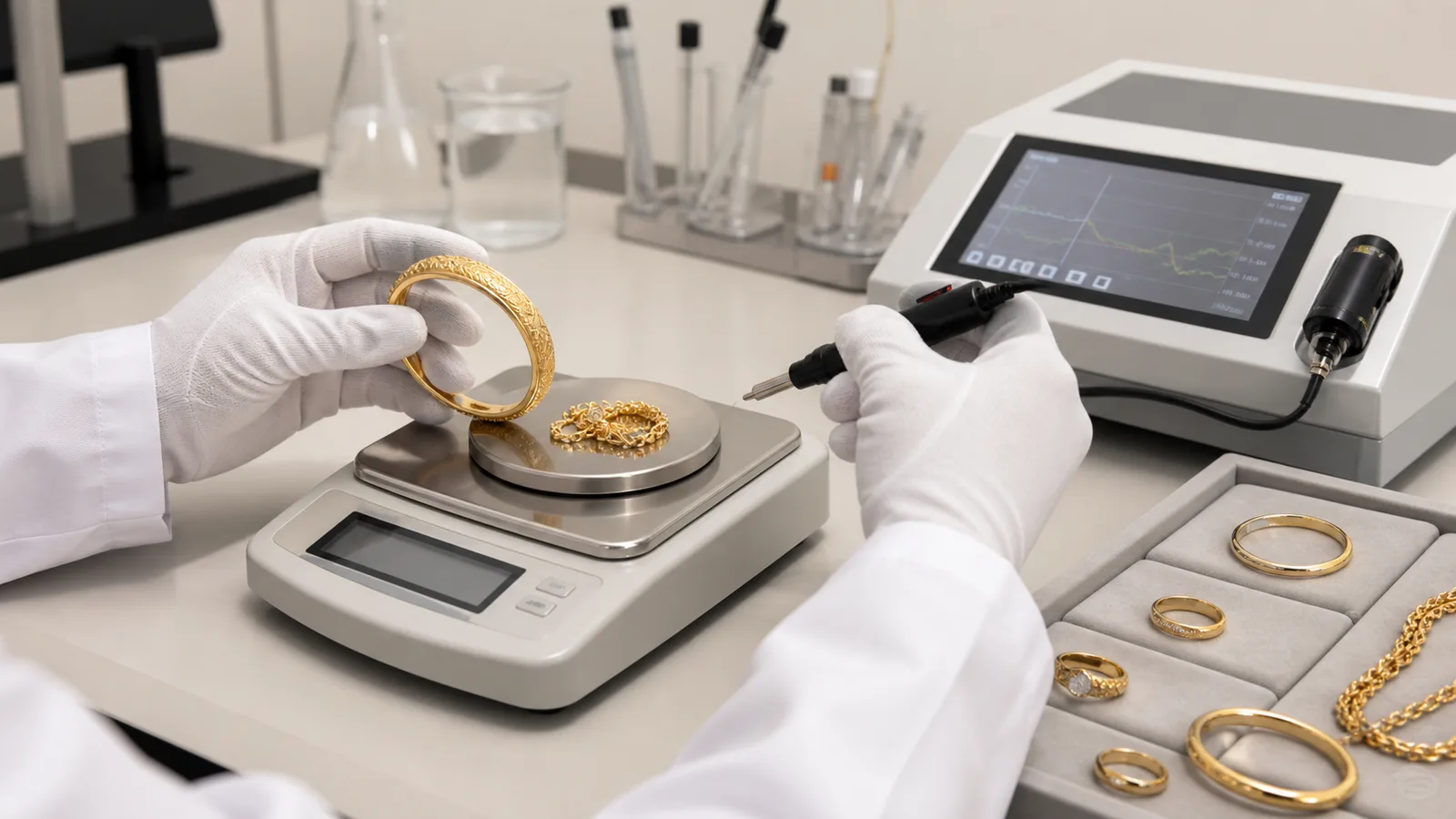
A transparent appraisal shows what is checked: purity, weight, condition, metal price, and the reasoning behind the offer. The exact process depends on the item and available equipment.
Step 1: identify the item
The item is described, including which parts are gold and whether it contains stones, fasteners, or other materials. Marks are useful evidence but are not final proof without confirmation.
Step 2: test purity
Purity is tested with a method suitable for the item. A spectrometer may provide composition information, but results should be considered together with weight, dimensions, and condition.
Step 3: weigh the item
The item is weighed with suitable equipment. Clarify whether the reading covers the entire item or whether stones and non-metal fittings must be excluded.
Step 4: explain the offer
The offer is linked to purity, net weight, metal price, and transaction terms. Ask for each key factor to be explained before deciding.
FAQs
- Is testing performed in front of me?
- Ask which stages you can observe and which results are recorded for the item.
- If a spectrometer is used, what does it show?
- It may show elements of the metal’s composition. It does not replace every other check or determine the final price on its own.
- Why are photos not enough?
- Photos cannot confirm weight, purity, authenticity, or hidden damage.
Related articles
- Online gold appraisal from photographs
What a photograph can and cannot show. Why purity, weight and authenticity need physical testing before any final price is quoted.
- How to compare gold-buying offers
Ask for net weight, purity, price per gram, testing method and final payout. A high promise with no breakdown cannot be compared to anything.
- Buying gold: frequently asked questions
Quick answers before you visit: price, purity, testing method, documents, payment, and the limits of an online appraisal.