Pawn or sell gold: how it works at our shop
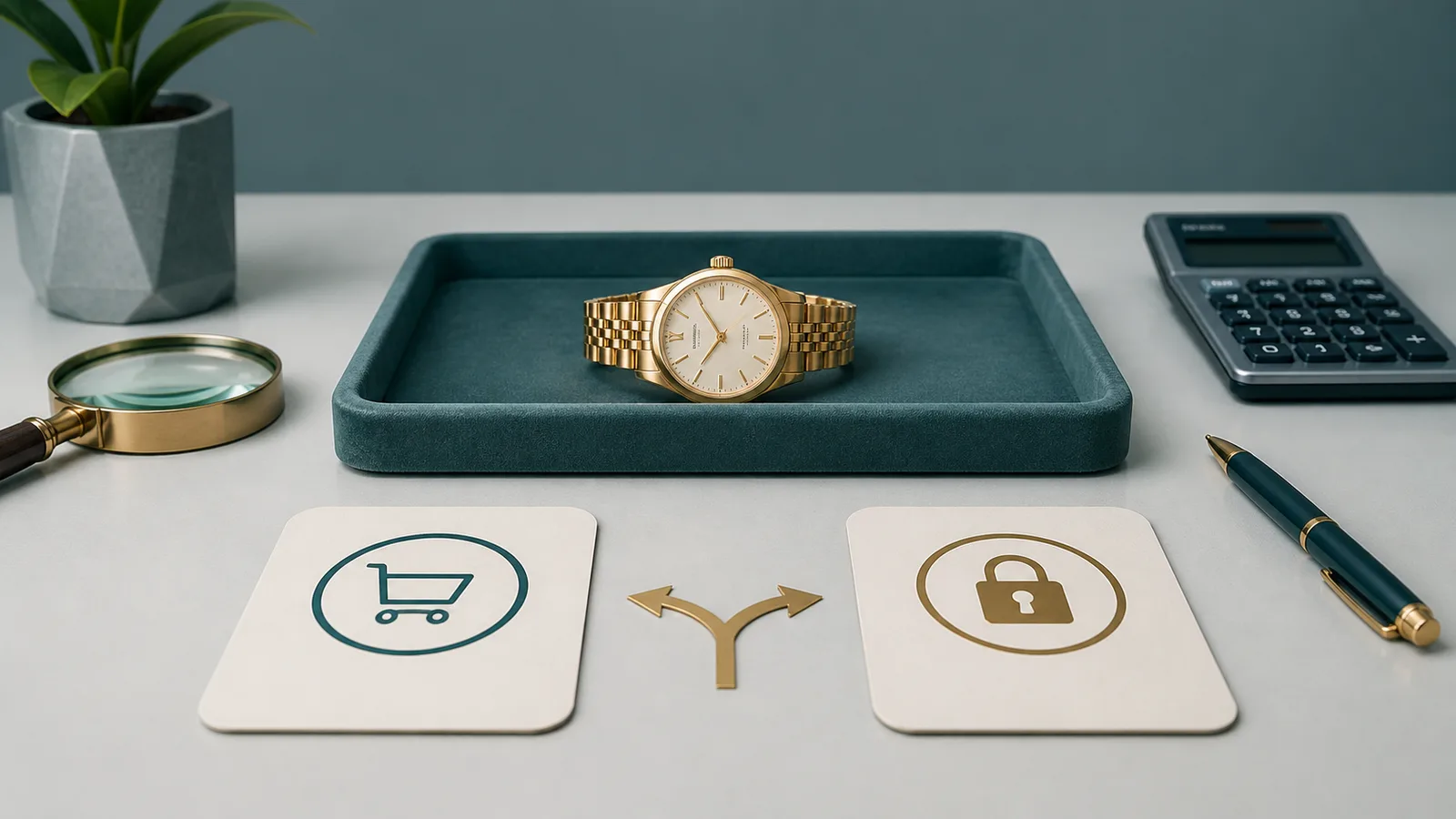
For as long as anyone remembers, people have called every gold-buying shop a “pawn shop”. The word stuck from another era, but the transaction is different: at a pawnbroker you leave the item and take a loan with interest and a deadline. With us you sell it, you are paid on the spot, and that is the end of it.
Selling, the way it happens here
We weigh the piece in front of you, test the karat and purity, and quote you based on the prices you see on our site. If you agree, you are paid immediately and get a receipt. If not, you take your piece back, with no obligation.
Pawning, so you know what it is
At a pawnbroker the item stays as security and you receive a sum as a loan, with interest and a repayment date. Our shop does not offer that service. Anyone who needs a loan rather than a sale should compare interest, duration and what happens if the deadline is missed before leaving anything behind.
Before you decide
- Ask for the offer in writing: weight, karat and price per gram.
- Compare it with the prices on our site and any other offer you have.
- Keep the receipt for the transaction.
- Take your time. The appraisal does not commit you to anything.
FAQs
- Do you offer pawn loans?
- We only buy. You are paid on the spot, with no loan, interest or commitments.
- Why do people call you a pawn shop?
- It is the name that stuck from the old days for gold-buying shops. We hear it often, which is why we explain it here.
- Is the same value always offered?
- Value depends on the item, the inspection and the gold price at the time of the transaction. A blog post is not a personal offer.
Related articles
- Documents needed to sell gold (or to “pawn” it, as many people say)
An ID card or passport, nothing else. What is recorded when we buy gold, why, and what you keep afterwards.
- What can I pawn? What we buy at the shop
If you are looking for somewhere to “pawn” gold, here you sell it outright. What we buy, what to bring, and how the price is worked out.
- Online gold appraisal from photographs
What a photograph can and cannot show. Why purity, weight and authenticity need physical testing before any final price is quoted.