Silverware: how the value is calculated
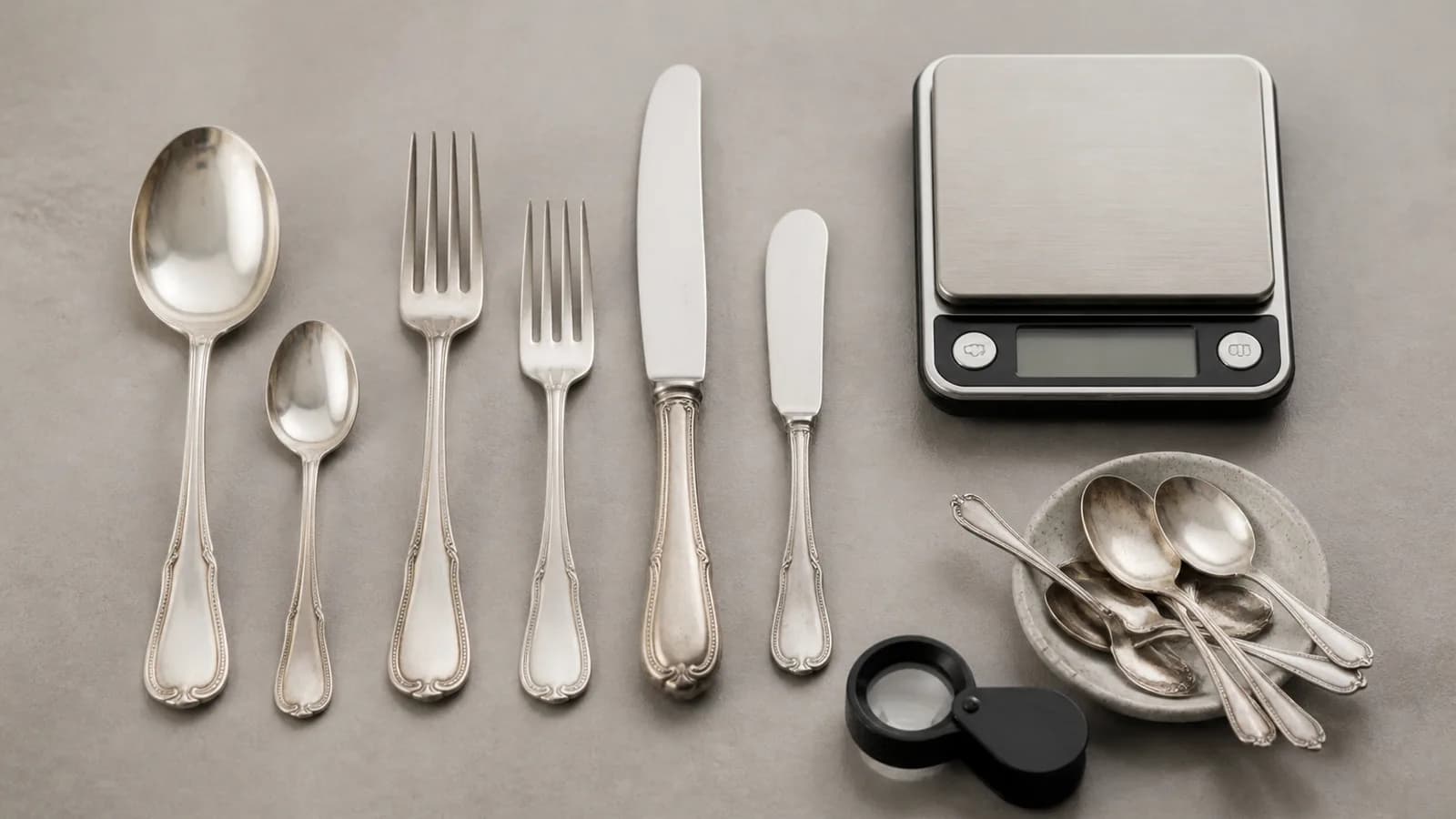
Silverware value depends on purity, weight, condition, set completeness, and the silver price at the time of appraisal. Appearance and total weight alone are not enough.
Reading silver marks
Marks indicate the proportion of silver in an alloy, but they should be confirmed. Check whether a mark applies to the whole item and whether some parts are made from other metals.
Why weight is not the whole story
Handles, knife blades, linings, and other fittings may not be silver. An appraisal should separate the net silver content from non-silver parts and consider condition.
What to do before appraisal
Group the pieces, note whether the set is complete, and keep any receipts or certificates. Do not remove fittings or aggressively clean the items before inspection.
When photos help
Photos can show marks, quantity, and condition. They cannot confirm purity, weight, or composition. A final offer requires inspection of the actual silverware.
FAQs
- Is silverware paid by the kilogram?
- Not always. Purity, net weight, condition, and transaction terms are considered.
- Does a complete set matter?
- It may affect commercial or collector value, but metal content and completeness are assessed separately.
- Should I clean it before appraisal?
- Avoid aggressive cleaning. It may alter surfaces, marks, or evidence useful for appraisal.
Related articles
- Selling gold jewellery: a practical guide
What sets the offer on gold jewellery: purity, net weight, stones, branded design and documents, and why the price is settled only after inspection.
- Gold 585 and 750: what the hallmarks mean
585 means 58.5% gold and 750 means 75%. Why a hallmark is a starting point for identification, not proof of purity or authenticity.
- Gold buying glossary: karats, spot, spread
The terms you will hear during an appraisal, explained plainly: karats, net weight, spot, spread, margin. Definitions never replace inspection.