Selling gold jewellery: a practical guide
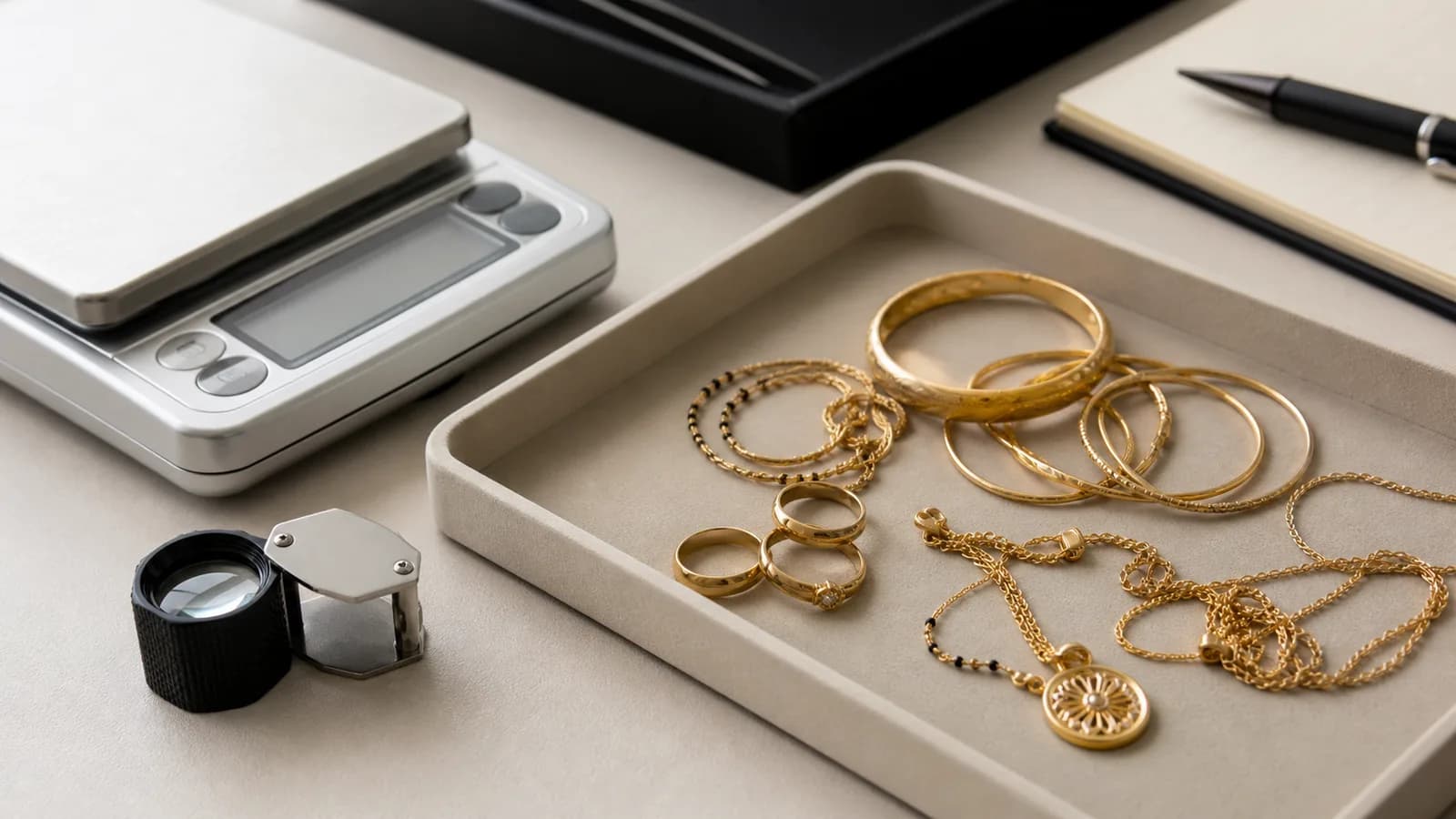
Gold jewellery value starts with purity and weight, but stones, branded design, condition, and documents can affect the offer. The final assessment follows inspection of the specific piece.
Items commonly considered
Rings, chains, bracelets, earrings, and broken jewellery may be considered when identification and measurement are possible. Acceptance depends on the process and transaction terms.
How purity and weight matter
Karat marks show the proportion of gold in an alloy. Total weight may include stones, springs, or other parts, so net gold weight matters more than a scale reading alone.
Stones and branded pieces
Stones are assessed separately and are not automatically treated as gold. A branded or distinctive design may have value beyond the metal, but it needs evidence and specialist assessment.
How to prepare jewellery
Bring any receipts or certificates, keep the pieces together, and do not remove stones or fittings. Avoid aggressive cleaning before inspection.
FAQs
- Are broken jewellery items considered?
- They may be considered if purity and weight can be tested.
- Are stones paid for as part of the jewellery?
- Not automatically. Their value is assessed separately according to type, condition, and supporting evidence.
- Does a purchase receipt matter?
- It may support documentation, but it does not replace inspection of the item.
Related articles
- Gold 585 and 750: what the hallmarks mean
585 means 58.5% gold and 750 means 75%. Why a hallmark is a starting point for identification, not proof of purity or authenticity.
- White and rose gold: how they are appraised
Alloy colour does not change value. White and rose gold are appraised on purity and net gold weight, exactly like any other piece.
- Silverware: how the value is calculated
Purity, weight, condition and set completeness decide what silverware is worth, not appearance. How a silverware appraisal is actually read.