Gold 585 and 750: what the hallmarks mean
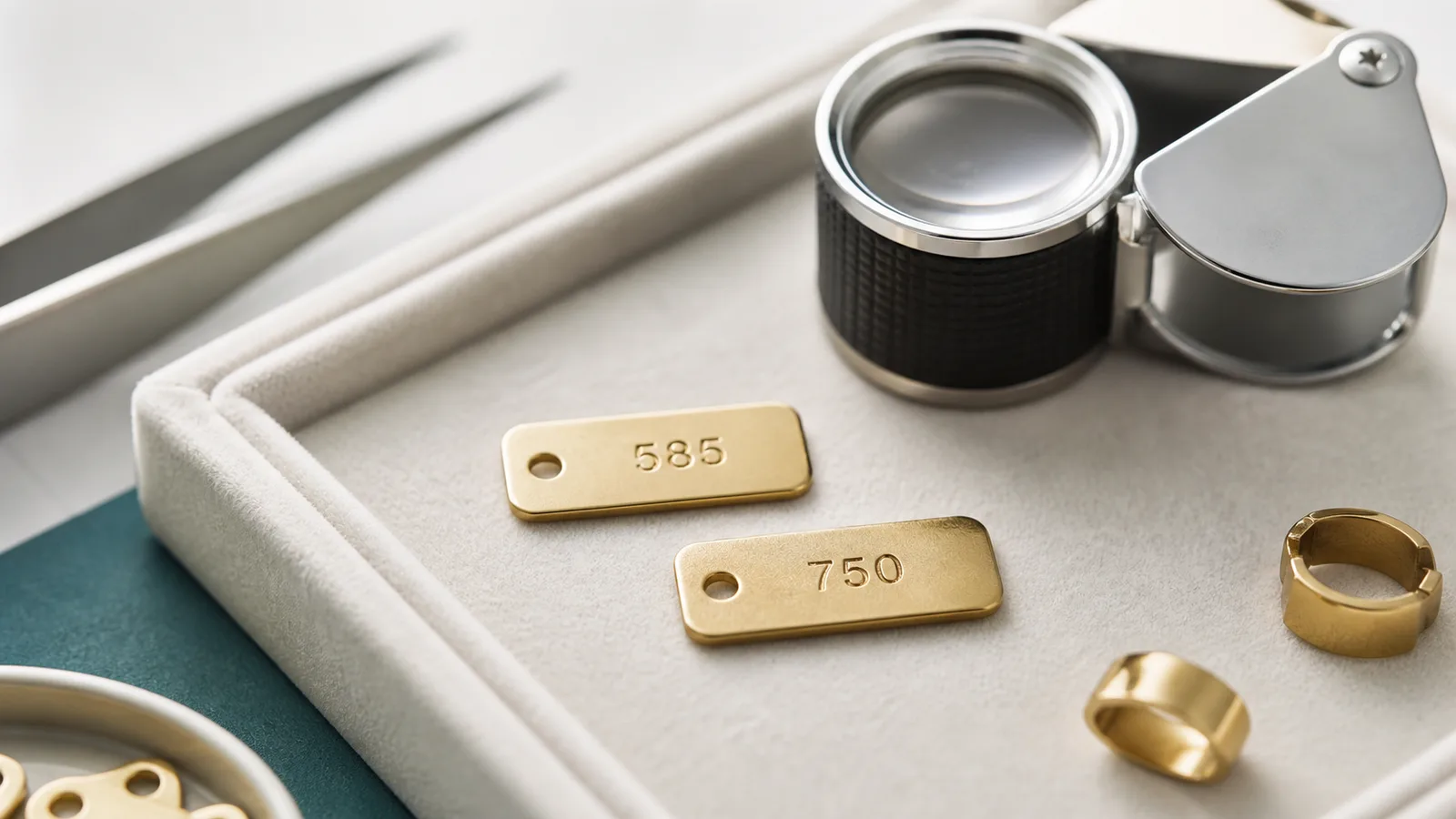
Marks such as 585 and 750 indicate the gold content of an alloy. 585 commonly means 58.5% gold, while 750 commonly means 75%. The mark helps with initial identification, but it is not enough for a final valuation.
What should be checked with the mark
Inspection considers condition, net weight, stones, other metals, and whether the mark is consistent with the item. A stamp can be worn, unclear, or require confirmation.
Why one number is not enough
Value does not come from 585 or 750 alone. Weight and alloy testing are also needed. Craftsmanship or collectible interest may matter for some items in addition to metal content.
FAQs
- Is 750 always better than 585?
- 750 contains a higher proportion of gold. That does not mean every 750 item has a higher total value because weight, condition, and form also matter.
- Can I rely on the stamp?
- The stamp is an initial clue. A complete inspection is safer, especially when the mark is worn or the item has an unusual construction.
- How does purity affect the offer?
- Purity affects the amount of pure gold in the item. The offer also depends on net weight and current market conditions.
Related articles
- Selling gold jewellery: a practical guide
What sets the offer on gold jewellery: purity, net weight, stones, branded design and documents, and why the price is settled only after inspection.
- White and rose gold: how they are appraised
Alloy colour does not change value. White and rose gold are appraised on purity and net gold weight, exactly like any other piece.
- Silverware: how the value is calculated
Purity, weight, condition and set completeness decide what silverware is worth, not appearance. How a silverware appraisal is actually read.