Diamond price per carat: what changes the value
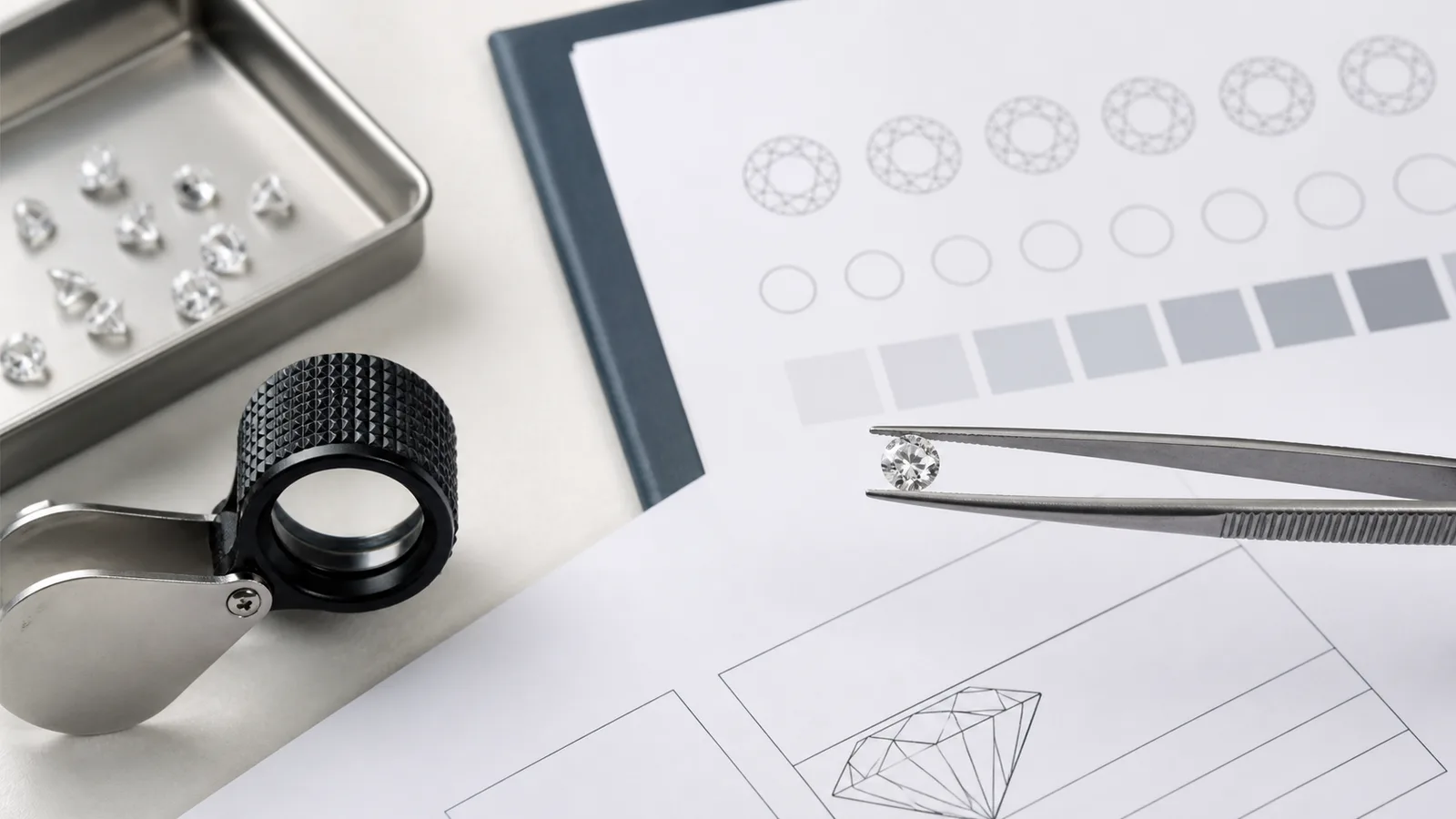
Diamond price does not depend only on carat weight. Cut, colour, clarity, certificate, condition, and whether the diamond is mounted also matter.
The 4Cs in simple terms
Carat describes weight, not quality by itself. Cut describes how the stone is shaped and returns light, colour describes its body colour, and clarity describes internal or external features. The factors work together.
Why a certificate matters
A reliable certificate can document characteristics and make comparisons easier. It does not replace checking that the document belongs to the specific diamond.
What changes when it is mounted
The setting affects presentation, security, and the jewellery’s value, but it should not be confused with the stone’s characteristics. The metal also needs inspection.
When specialist inspection is needed
Physical examination is appropriate before a sale or when there is no certificate. Photos cannot accurately confirm the 4Cs, provenance, or treatments.
FAQs
- Is weight enough to set a price?
- No. Weight is one factor alongside cut, colour, clarity, certificate, and condition.
- Is a certificate required?
- Not always for an initial conversation, but it helps with documentation and comparison.
- Is a diamond in a ring paid for separately?
- The stone and metal are assessed separately before a total offer is calculated.
Related articles
- Diamonds and the 4Cs: what affects value
Carat, colour, clarity and cut organise how a diamond is described, but certificate, condition and the market decide what it is finally worth.
- Gold buying glossary: karats, spot, spread
The terms you will hear during an appraisal, explained plainly: karats, net weight, spot, spread, margin. Definitions never replace inspection.
- Gold and silver bars: how they are appraised
Weight, purity, certification, packaging condition and the live metal price: what gets examined when you sell a gold or silver bar.