Gold and silver bars: how they are appraised
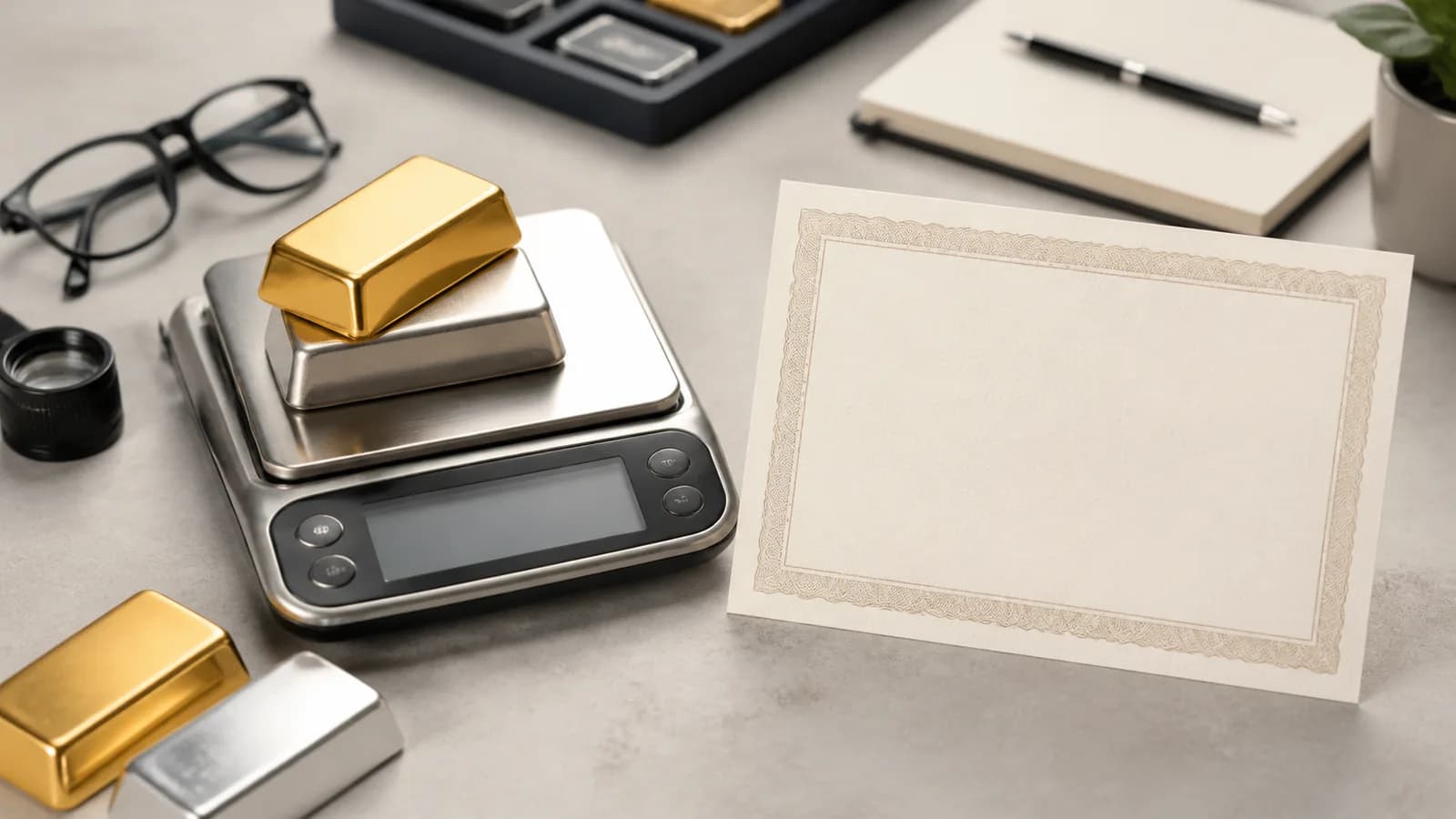
Gold or silver bar appraisal depends on weight, purity, certification, packaging condition, and the live metal price.
What should be visible
Useful details include metal, weight, purity, serial or hallmark, and maker where shown. Packaging or a mark alone is not enough without confirmation.
Why certification matters
A certificate or supporting document may help with identification and marketability. It should be checked against the specific bar and signs of alteration.
When authenticity testing is needed
Testing is appropriate when the bar is unsealed, packaging is damaged, information is missing, or weight and composition are uncertain. A final assessment cannot be based on photos alone.
How the live price is used
Metal prices change. An offer may depend on purity, weight, marketability, inspection, and the market margin, not only the spot price.
FAQs
- Does a bar need to be sealed?
- Sealed packaging may help, but it does not replace testing.
- Is it always paid at the spot price?
- Not necessarily. A reference price and a transaction price may differ.
- Are silver bars accepted?
- Acceptance depends on the product, its documentation, and the inspection process.
Related articles
- Silverware: how the value is calculated
Purity, weight, condition and set completeness decide what silverware is worth, not appearance. How a silverware appraisal is actually read.
- Diamond price per carat: what changes the value
Two diamonds of equal weight are not worth the same. How cut, colour, clarity, certificate and setting move the price per carat.
- Gold buying glossary: karats, spot, spread
The terms you will hear during an appraisal, explained plainly: karats, net weight, spot, spread, margin. Definitions never replace inspection.