Diamonds and the 4Cs: what affects value
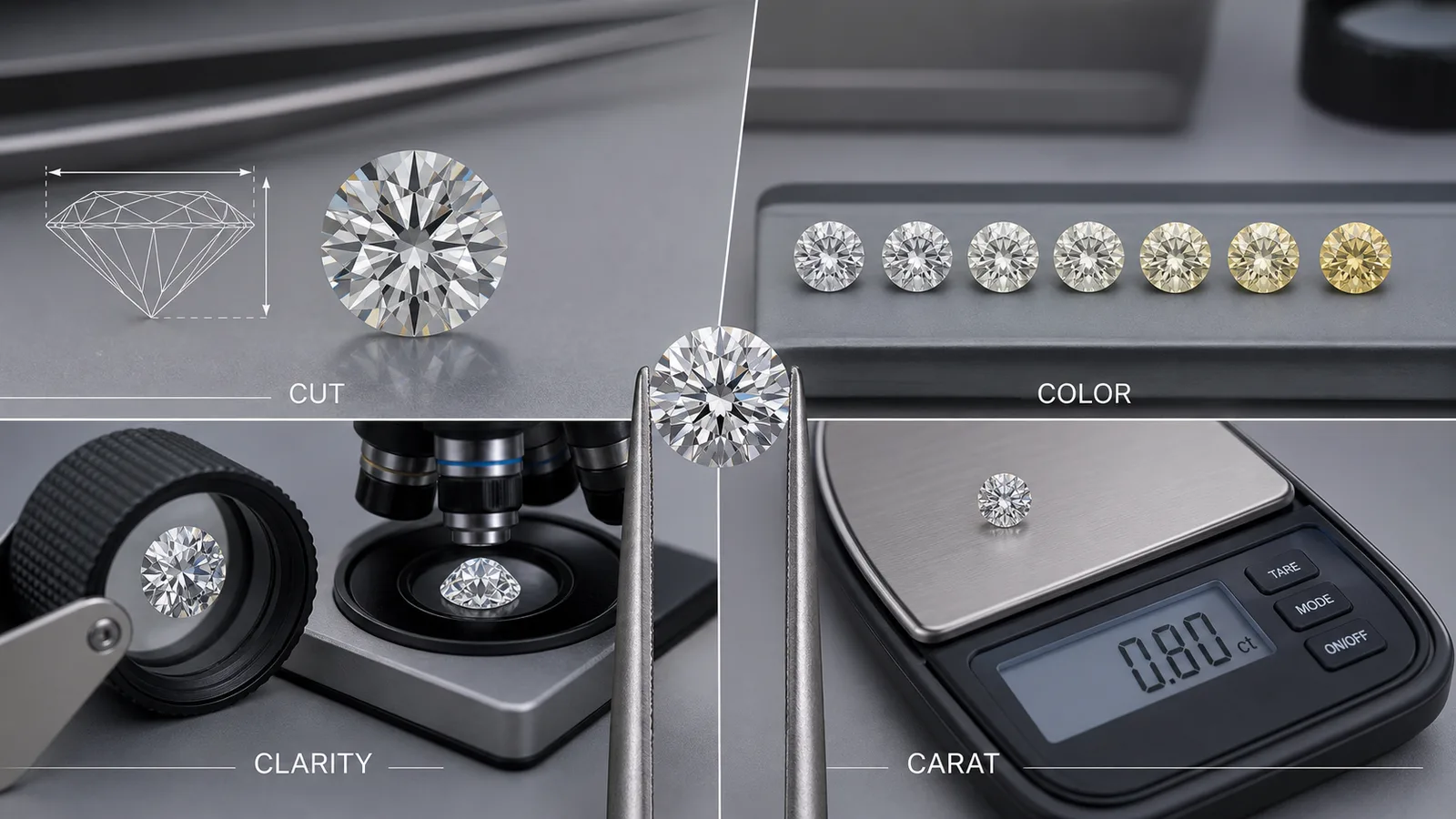
Diamond assessment depends on more than size. The 4Cs (carat weight, colour, clarity, and cut) organise the description, while final value also depends on documentation, condition, and market demand.
The four characteristics
Carat describes weight. Colour, clarity, and cut describe different properties. Cut is not only shape; it also concerns proportions, symmetry, and polish, which affect appearance.
Why inspection matters
Appearance alone cannot confirm quality or origin. The stone, setting, available documentation, and treatment indicators should be considered together. Do not assign a final value without adequate inspection.
FAQs
- Is a larger diamond always worth more?
- No. Value depends on the 4Cs, quality, documentation, condition, and demand. Weight is only one factor.
- Is a certificate enough?
- A certificate helps describe the stone, but it should match the diamond and be considered alongside the setting and condition.
- Can photos provide a final appraisal?
- Photos can support an initial conversation, but not a reliable final appraisal. The stone or jewellery must be inspected.
Related articles
- Diamond price per carat: what changes the value
Two diamonds of equal weight are not worth the same. How cut, colour, clarity, certificate and setting move the price per carat.
- Gemstones: how appraisal works
Identifying the stone, weight, quality, possible treatments and certificate, and what changes when the stone is mounted in jewellery.
- Ruby, emerald and sapphire: how they are appraised
Colour and size are not enough. What is examined in a ruby, emerald or sapphire: treatment, cut, clarity, documented origin and setting.