How the gold price per gram is calculated
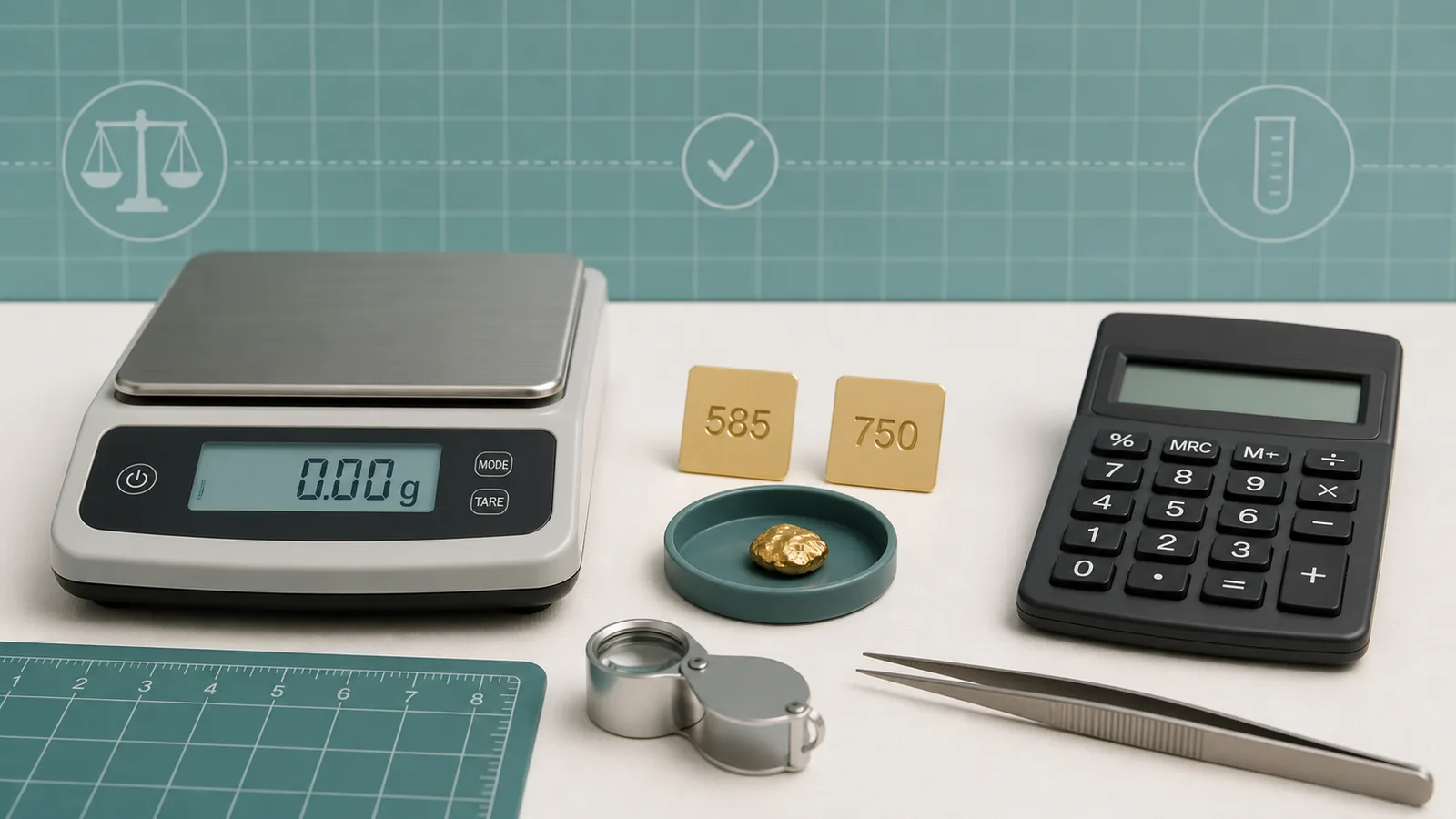
Gold price per gram is not identical for every item. It depends on purity, net weight, the current metal price, and the transaction margin.
The basic calculation
An indicative calculation is:
**net weight × purity × pure-gold price = indicative metal value**
The final offer may differ because jewellery includes non-gold parts and market prices change.
What karats mean
Karat marks show the proportion of gold in an alloy. Marks such as 585 and 750 commonly indicate 58.5% and 75% gold. A mark is useful evidence, but it does not replace testing.
Why offers change
Gold prices can move during the day. A reference price is also different from the buying price for a particular item. Every offer should therefore be tied to a time and explained clearly.
FAQs
- Is the full weight paid as pure gold?
- Not necessarily. The calculation considers the gold content after accounting for stones, fittings, and other materials. The exact method should be explained during inspection.
- Why can the price change during the day?
- The reference metal price moves continuously. Different purities and item types can also use different transaction prices.
- What is a spread?
- A spread is the difference between a reference price and a transaction price. It reflects operating costs and market risk and should be explained before acceptance.
Related articles
- Gold buying glossary: karats, spot, spread
The terms you will hear during an appraisal, explained plainly: karats, net weight, spot, spread, margin. Definitions never replace inspection.
- Selling gold jewellery: a practical guide
What sets the offer on gold jewellery: purity, net weight, stones, branded design and documents, and why the price is settled only after inspection.
- Silverware: how the value is calculated
Purity, weight, condition and set completeness decide what silverware is worth, not appearance. How a silverware appraisal is actually read.