Gold coins: how a collection is appraised
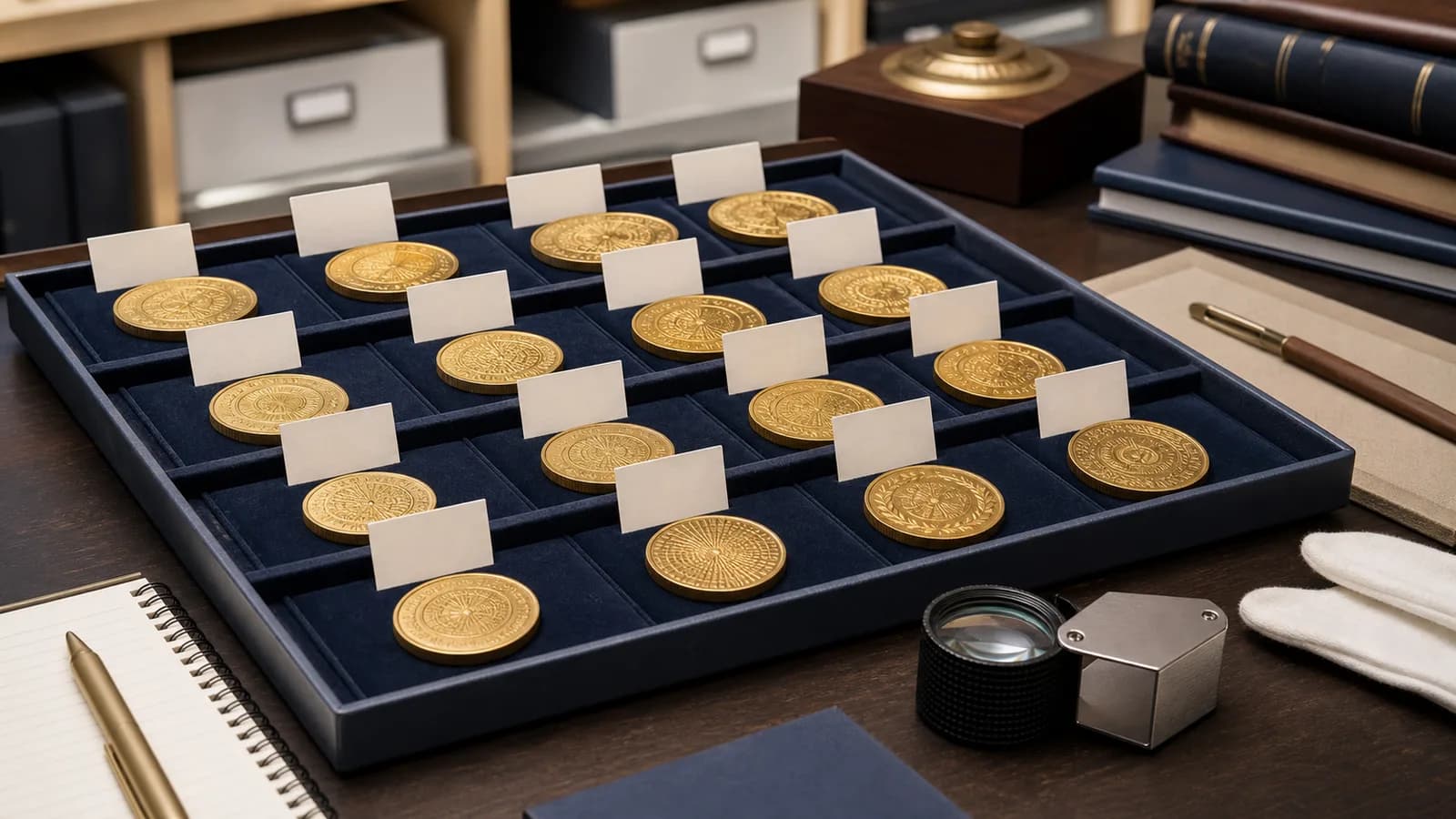
A gold coin collection is appraised coin by coin. Metal, weight, authenticity, condition, year, rarity, and demand all matter. Not every old coin has the same collector value.
Details needed for each coin
Record the country, year, denomination, weight, case, and certificates where known. Photograph both faces and the edge, and do not clean the coin.
Metal value and collector value
Metal value relates to purity, weight, and the gold price. Collector value may add a premium when issue, condition, and demand justify it. The two values should be assessed separately.
How to organize a collection
Keep coins in separate holders, number them, and gather available documents. Do not rub or polish them, as this can affect condition and future appraisal.
When specialist inspection is needed
Specialist inspection is appropriate when weight or dimensions differ, authenticity is uncertain, or a scarce issue is possible. Photos are only a first step.
FAQs
- Should I clean coins before bringing them in?
- No. Cleaning can alter surfaces and reduce their collector appeal.
- Do the case or certificate matter?
- They may support documentation, but authenticity and condition are assessed separately.
- How is collector value separated from metal value?
- Through the issue, features, condition, demand, and metal-content assessment.
Related articles
- Gold sovereign: history and value
A sovereign's value is not gold weight alone. Issue, authenticity and condition separate metal value from collector value, and both are checked.
- The Vasilopita gold sovereign: value and checks
A sovereign found in a Vasilopita may carry metal or collector value. What gets checked for authenticity and condition before any offer is made.
- Greek gold coins: history and value
Identification comes before price. How date, issue, condition and authenticity each affect a Greek gold coin differently: colour proves nothing.