Greek gold coins: history and value
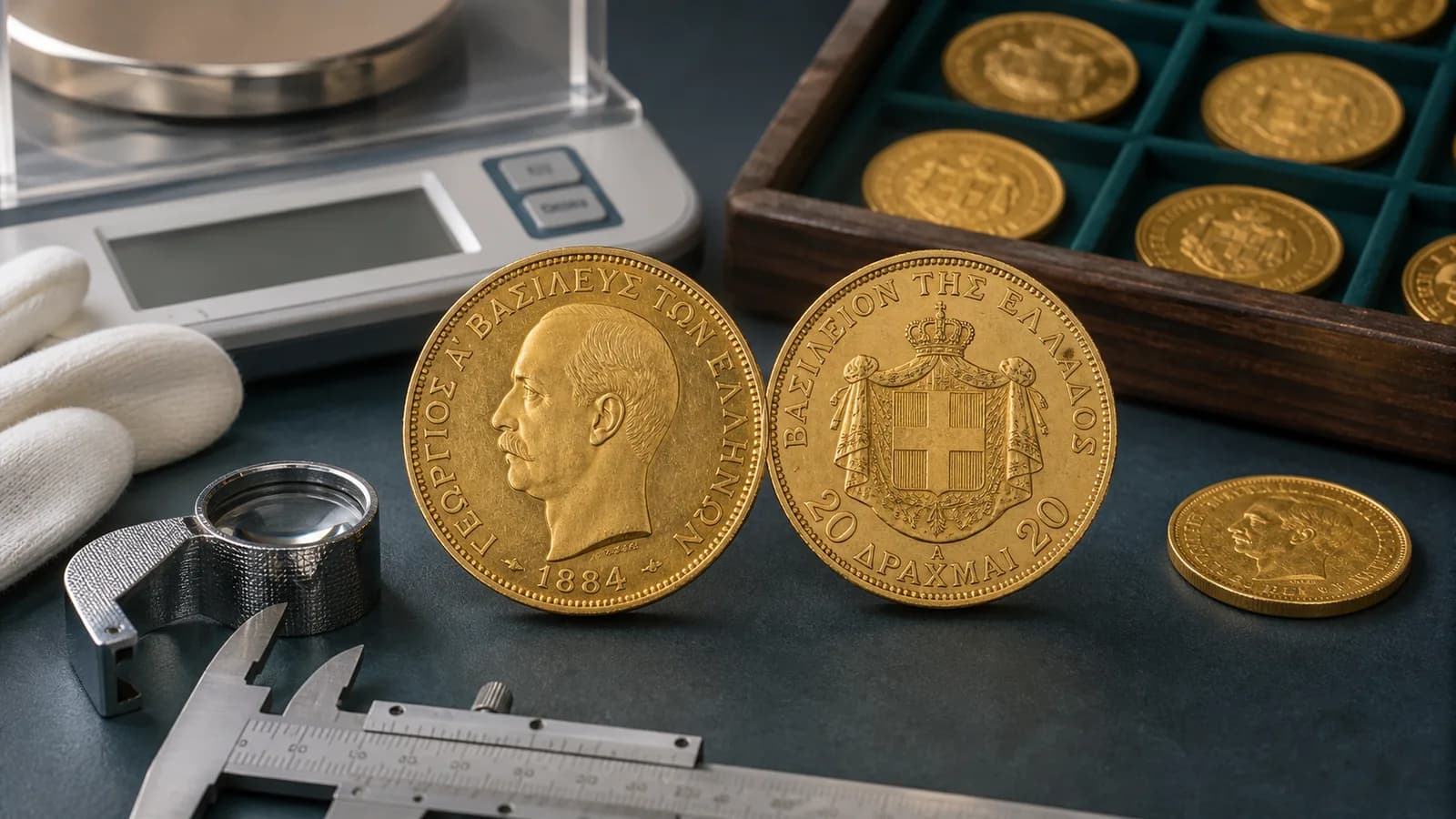
Valuing a Greek gold coin starts with careful identification. Date, issue, condition, metal, and authenticity can affect the result in different ways. A coin is not valued only by its colour or age.
How identification starts
Record visible details without cleaning the coin: inscription, design, denomination, date, mint mark, and edge. These details should be compared with the relevant issue.
What affects value
Value may include both metal and collectible components. Inspection considers weight, dimensions, alloy, condition, scarcity, and demand. Wear, scratches, and cleaning can affect collectible appeal.
FAQs
- Does every old Greek coin have high value?
- No. Age alone is not enough. The issue, metal, condition, and demand must be identified and assessed.
- Should I clean the coin first?
- No. Cleaning can leave marks or change the surface. Keep the coin in its current condition until it is inspected.
- Can photos provide a final price?
- Photos may help identify the object, but they cannot confirm weight, dimensions, alloy, or authenticity. A final assessment requires physical inspection.
Related articles
- Gold coins: how a collection is appraised
A collection is appraised coin by coin. Metal, weight, authenticity, condition, year and demand: why not every old coin carries the same value.
- Gold sovereign: history and value
A sovereign's value is not gold weight alone. Issue, authenticity and condition separate metal value from collector value, and both are checked.
- The Vasilopita gold sovereign: value and checks
A sovereign found in a Vasilopita may carry metal or collector value. What gets checked for authenticity and condition before any offer is made.