Gold sovereign: history and value
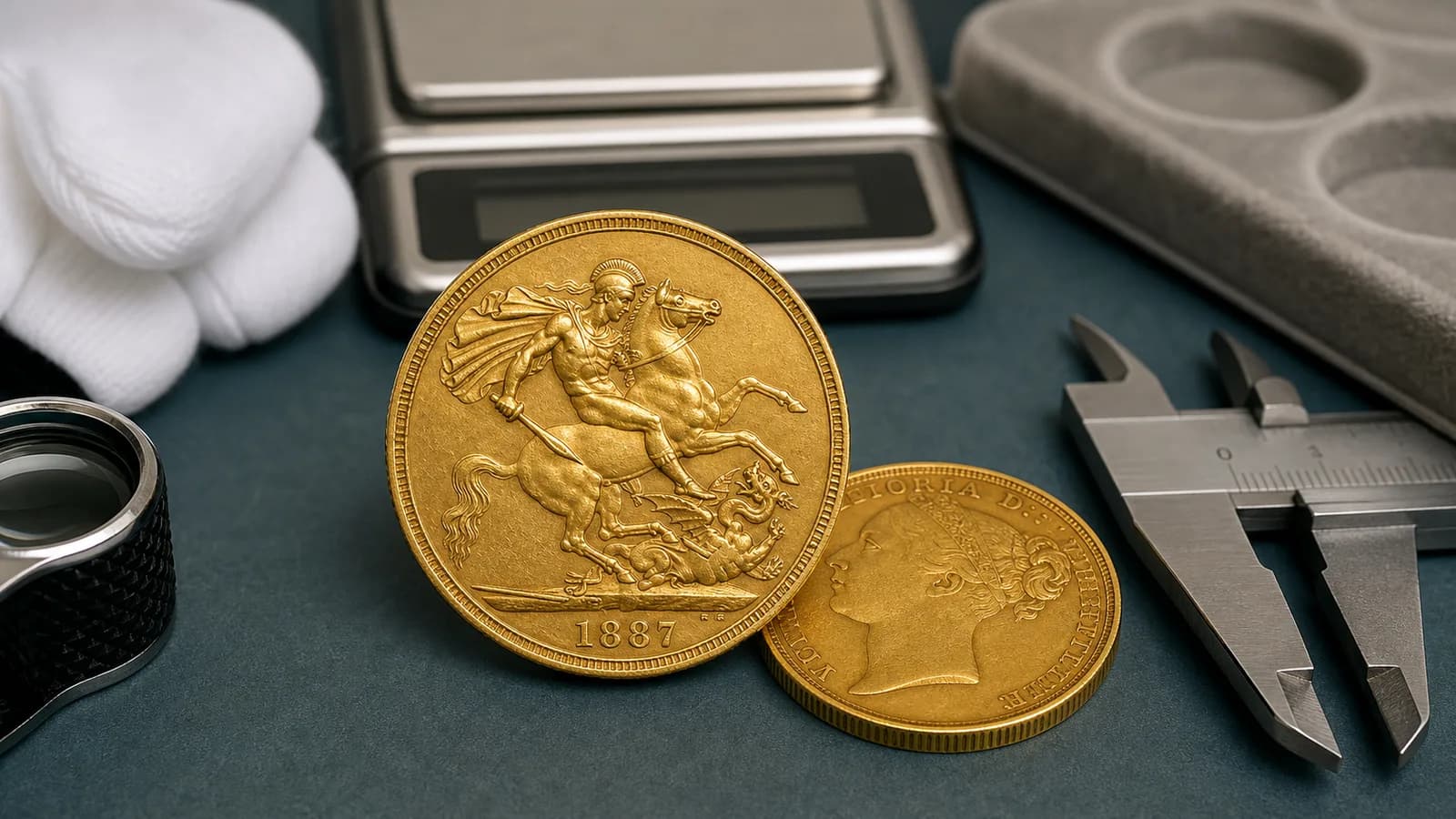
A gold sovereign can carry both metal and historical interest. Its value does not come from gold weight alone. The issue, authenticity, condition, and demand for the specific coin must also be considered.
What is examined
Inspection begins with weight, dimensions, appearance, relief, and edge details. The characteristics are then compared with the relevant issue. A photograph may support initial identification, but it cannot provide a final valuation.
Metal and collectible value
Metal value relates to purity and weight. Collectible value may depend on issue, condition, scarcity, and demand. Not every old sovereign has the same commercial value.
FAQs
- How is a gold sovereign valued?
- Through combined checks of weight, dimensions, features, authenticity, and condition. The final value also depends on market conditions at the time of assessment.
- Does a worn sovereign still have value?
- It may, but wear can affect appearance and collectible demand. Metal value and collectible value should be considered separately.
- Can a photo give a reliable result?
- No. A photo cannot accurately confirm weight, dimensions, alloy, or authenticity. A serious assessment requires physical inspection.
Related articles
- The Vasilopita gold sovereign: value and checks
A sovereign found in a Vasilopita may carry metal or collector value. What gets checked for authenticity and condition before any offer is made.
- How to spot a counterfeit gold sovereign
No single sign proves authenticity. Weight, dimensions, appearance, sound and magnet tests give clues. Only the combination decides.
- Gold coins: how a collection is appraised
A collection is appraised coin by coin. Metal, weight, authenticity, condition, year and demand: why not every old coin carries the same value.