How to spot a counterfeit gold sovereign
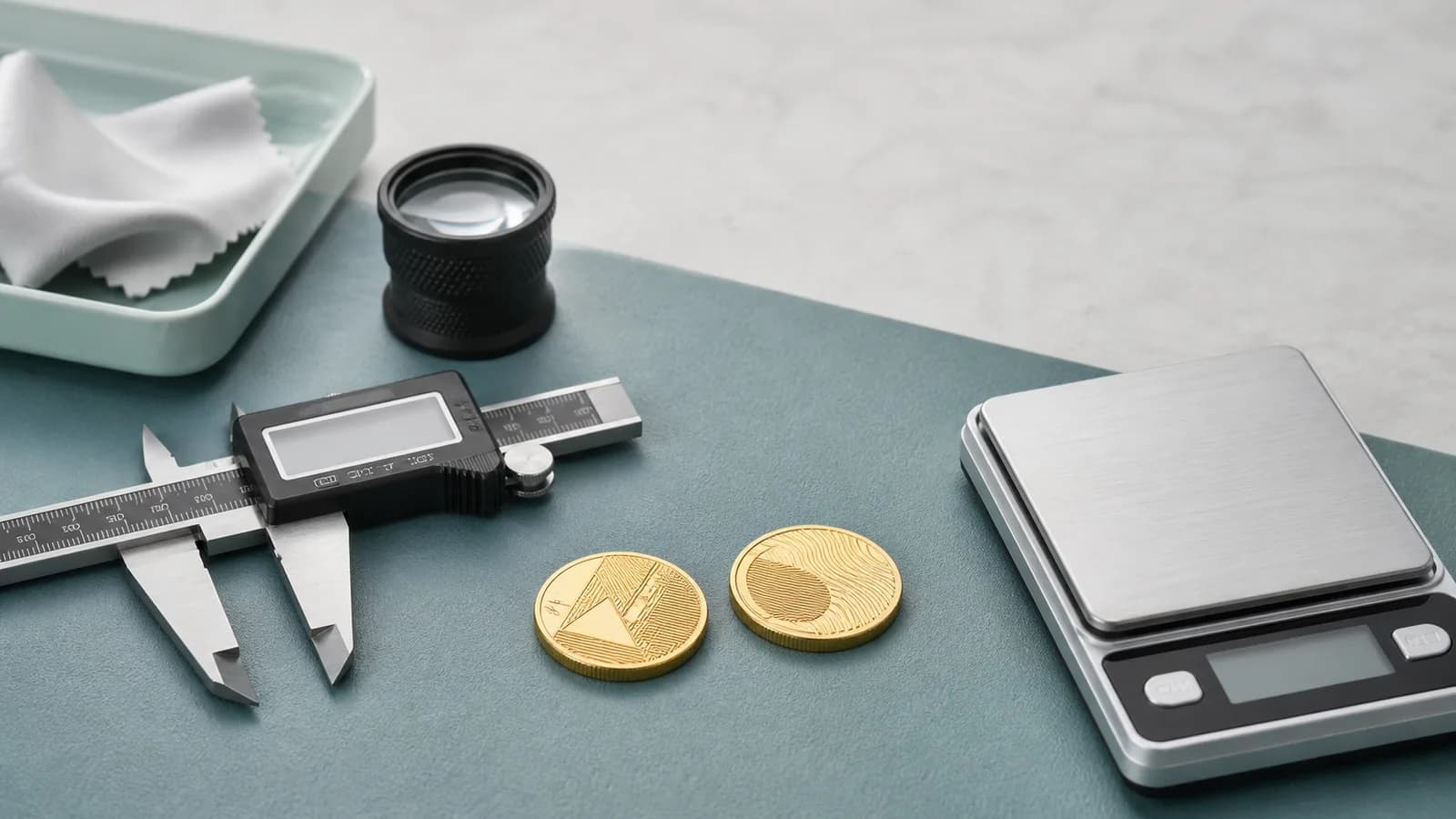
The authenticity of a gold sovereign cannot be proven by one sign. Weight, dimensions, appearance, sound, and magnet tests may provide clues, but a reliable assessment requires combined inspection.
Useful indications
Compare weight and dimensions with the specifications of the particular issue. Examine relief, edges, and details. A magnet can rule out some metals, but it cannot certify authenticity on its own.
What not to do
Do not scratch, file, heat, or strike the coin. These tests can reduce value and destroy evidence needed for assessment.
FAQs
- If a magnet does not attract it, is it genuine?
- No. Lack of attraction rules out only some possibilities. It does not confirm alloy, weight, issue, or authenticity.
- Can I test it myself?
- You can make a careful visual check without altering the coin. A reliable conclusion requires combined measurements and technical inspection.
- What should I do if I am unsure?
- Keep the coin unchanged and request an assessment. Do not polish it or use tests that leave marks.
Related articles
- Gold sovereign: history and value
A sovereign's value is not gold weight alone. Issue, authenticity and condition separate metal value from collector value, and both are checked.
- The Vasilopita gold sovereign: value and checks
A sovereign found in a Vasilopita may carry metal or collector value. What gets checked for authenticity and condition before any offer is made.
- Gold coins: how a collection is appraised
A collection is appraised coin by coin. Metal, weight, authenticity, condition, year and demand: why not every old coin carries the same value.