Ruby, emerald and sapphire: how they are appraised
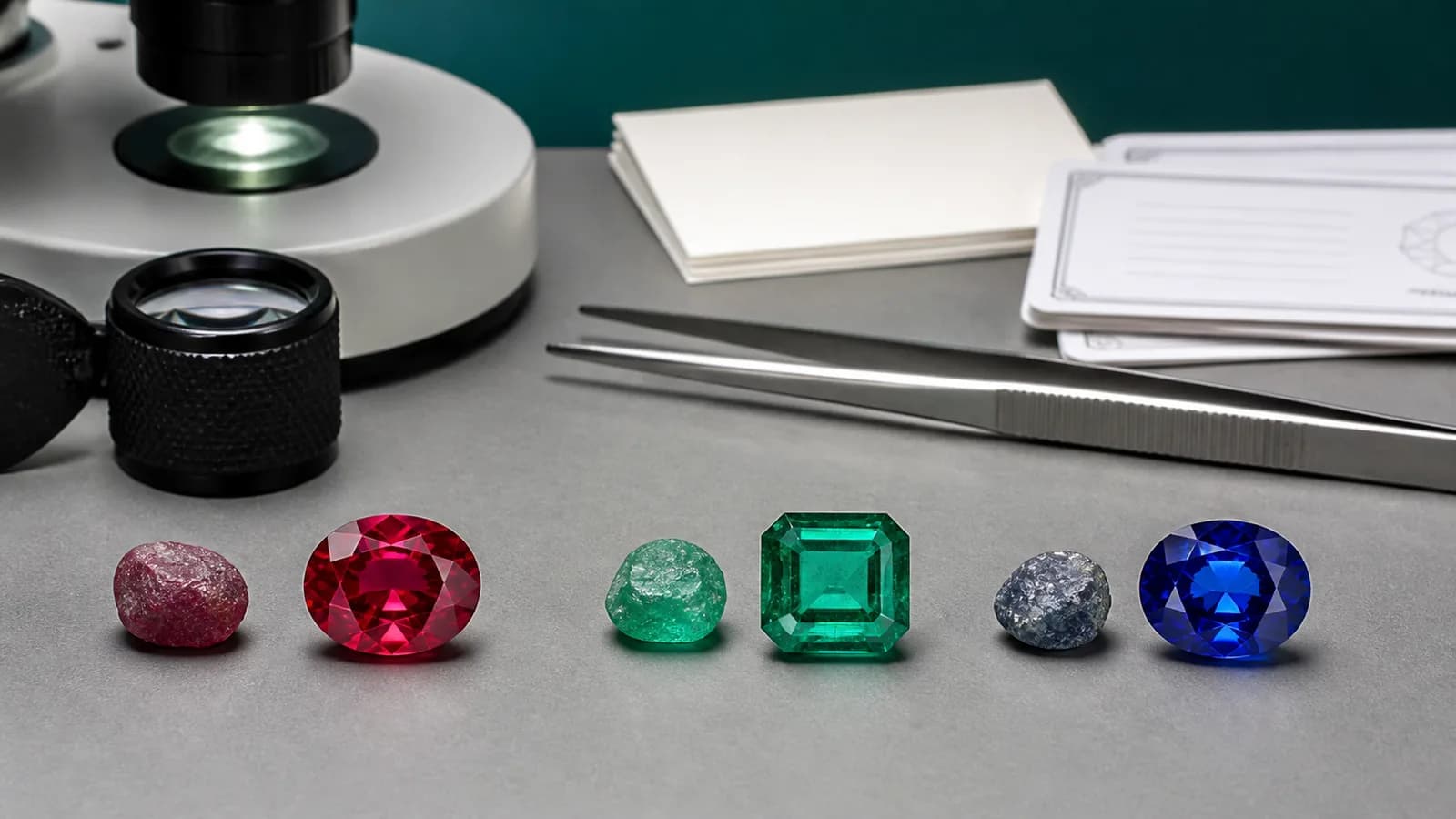
The value of a ruby, emerald, or sapphire does not come from colour or size alone. Assessment considers the stone, possible treatments, cut, clarity, documented origin where available, and the jewellery setting.
What is examined
Colour, transparency, weight, cut, inclusions, and wear are recorded. Possible treatment or replacement indicators are also considered. Natural and synthetic stones should not be treated as identical without inspection.
The role of the jewellery
Metal, construction, and condition affect the overall assessment. A certificate or old document may help, but it must correspond to the specific item.
FAQs
- Can colour prove value?
- No. Colour matters, but it is not enough. Clarity, treatment, cut, documented origin where available, and condition must also be considered.
- Should I remove the stone from the jewellery?
- Not before professional assessment. Removal can cause damage and is not necessary for every initial inspection.
- Is a photo appraisal reliable?
- A photo shows only part of the picture. It cannot reliably confirm natural origin, treatment, clarity, or exact weight.
Related articles
- Diamonds and the 4Cs: what affects value
Carat, colour, clarity and cut organise how a diamond is described, but certificate, condition and the market decide what it is finally worth.
- Diamond price per carat: what changes the value
Two diamonds of equal weight are not worth the same. How cut, colour, clarity, certificate and setting move the price per carat.
- Gemstones: how appraisal works
Identifying the stone, weight, quality, possible treatments and certificate, and what changes when the stone is mounted in jewellery.