Greek coins with value: what to check
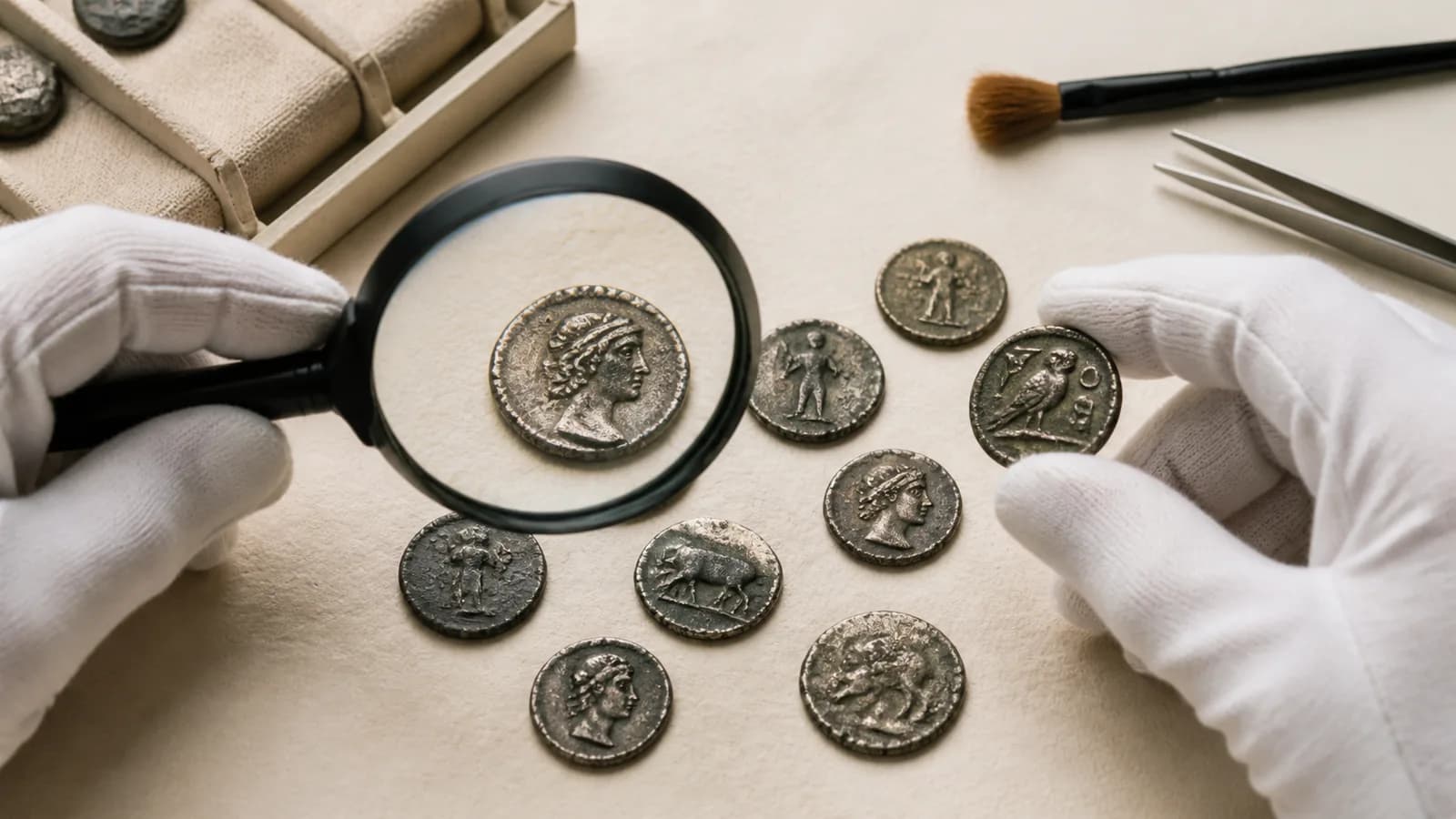
Greek coin value is not based only on age. Metal, year, condition, rarity, demand, and authenticity matter.
What to photograph
Take clear photos of both faces, the edge, and any marks or holders. Note diameter, weight, and known provenance, without treating provenance alone as proof of authenticity.
When metal matters
For coins containing precious metal, value relates to weight, purity, and the metal price. Collector demand can change the overall assessment.
When rarity matters
Rarity is not determined by year alone. Compare issue, condition, recognized features, and demand. Do not copy unreliable prices from listings or photos.
What to avoid before appraisal
Do not clean, polish, or scratch coins. Keep them in a safe holder and bring certificates or earlier appraisals if available.
FAQs
- Do all old coins have value?
- No. Age is only one factor; authenticity, condition, and demand must also be checked.
- Should I clean an old coin?
- Not before appraisal. Cleaning can affect the surface and collector value.
- Can I get an initial view from photos?
- Yes, for initial identification. Final appraisal requires physical inspection.
Related articles
- Gold coins: how a collection is appraised
A collection is appraised coin by coin. Metal, weight, authenticity, condition, year and demand: why not every old coin carries the same value.
- Gold sovereign: history and value
A sovereign's value is not gold weight alone. Issue, authenticity and condition separate metal value from collector value, and both are checked.
- The Vasilopita gold sovereign: value and checks
A sovereign found in a Vasilopita may carry metal or collector value. What gets checked for authenticity and condition before any offer is made.