Does a magnet attract gold?
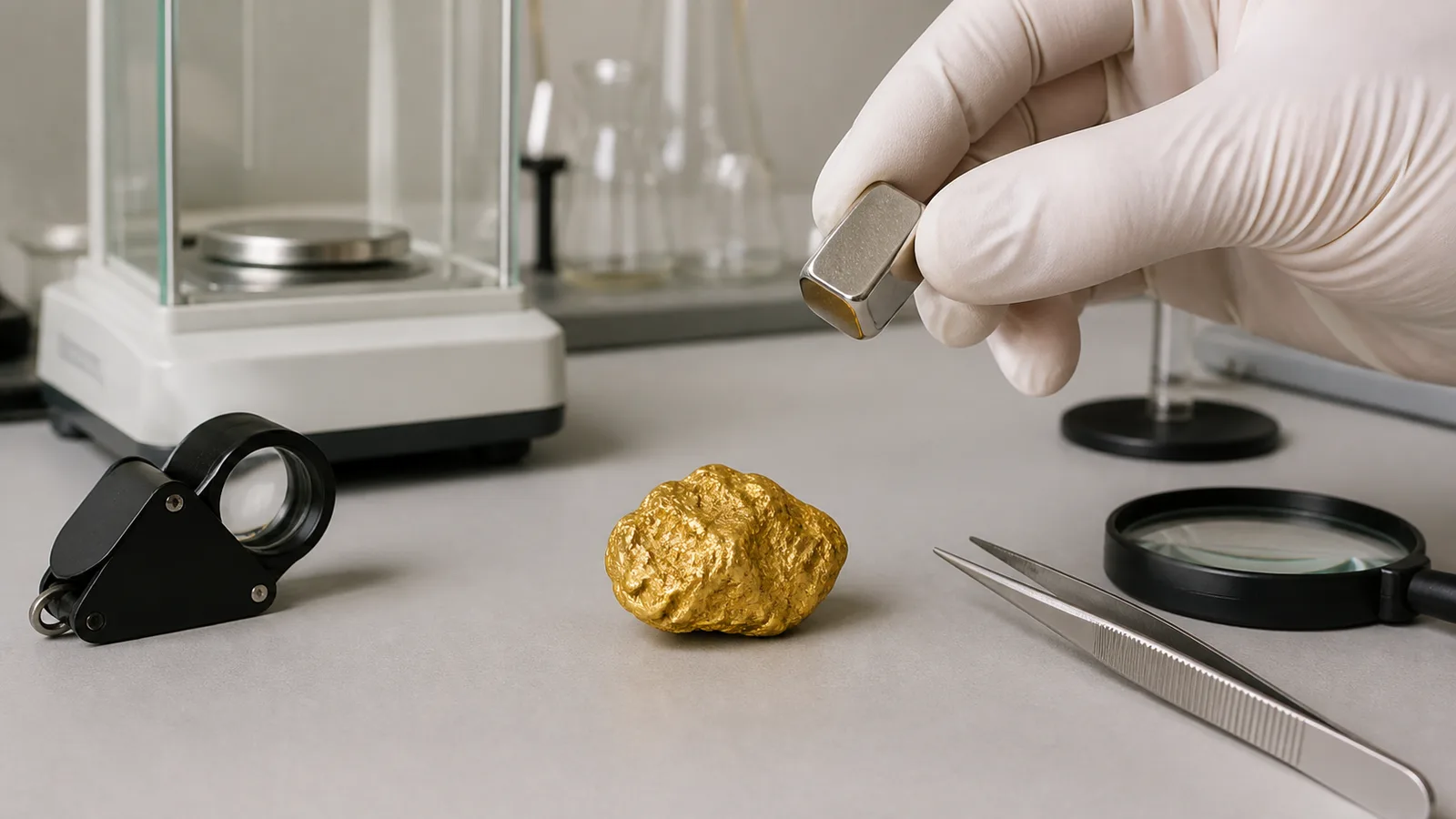
Pure gold is not magnetic, but a magnet test alone does not prove authenticity or purity. The specific item needs proper testing.
What a magnet can show
A strong magnetic response may indicate ferrous or another magnetic metal in part of the item. The result can be affected by fittings, clasps, and other components.
What it cannot prove
An item that does not stick to a magnet is not necessarily gold. Many non-gold metals are non-magnetic, and a small response does not identify purity.
What tests are needed
Testing combines marks, weight, dimensions, condition, and a suitable purity test. Do not scratch or damage the item for a home test.
When to bring the item in
Bring it for inspection when authenticity is uncertain, a hallmark is worn, or before a sale. Do not rely on one video or one result.
FAQs
- If it does not stick to a magnet, is it gold?
- No. That result only rules out some possibilities and does not prove authenticity.
- If it sticks slightly, is it fake?
- Not necessarily. A fitting may react, so the whole item needs inspection.
- How is purity identified?
- Through a combination of visual inspection, measurement, and a suitable purity test.
Related articles
- Selling gold jewellery: a practical guide
What sets the offer on gold jewellery: purity, net weight, stones, branded design and documents, and why the price is settled only after inspection.
- Silverware: how the value is calculated
Purity, weight, condition and set completeness decide what silverware is worth, not appearance. How a silverware appraisal is actually read.
- Gold 585 and 750: what the hallmarks mean
585 means 58.5% gold and 750 means 75%. Why a hallmark is a starting point for identification, not proof of purity or authenticity.