Dental gold: does it have value?
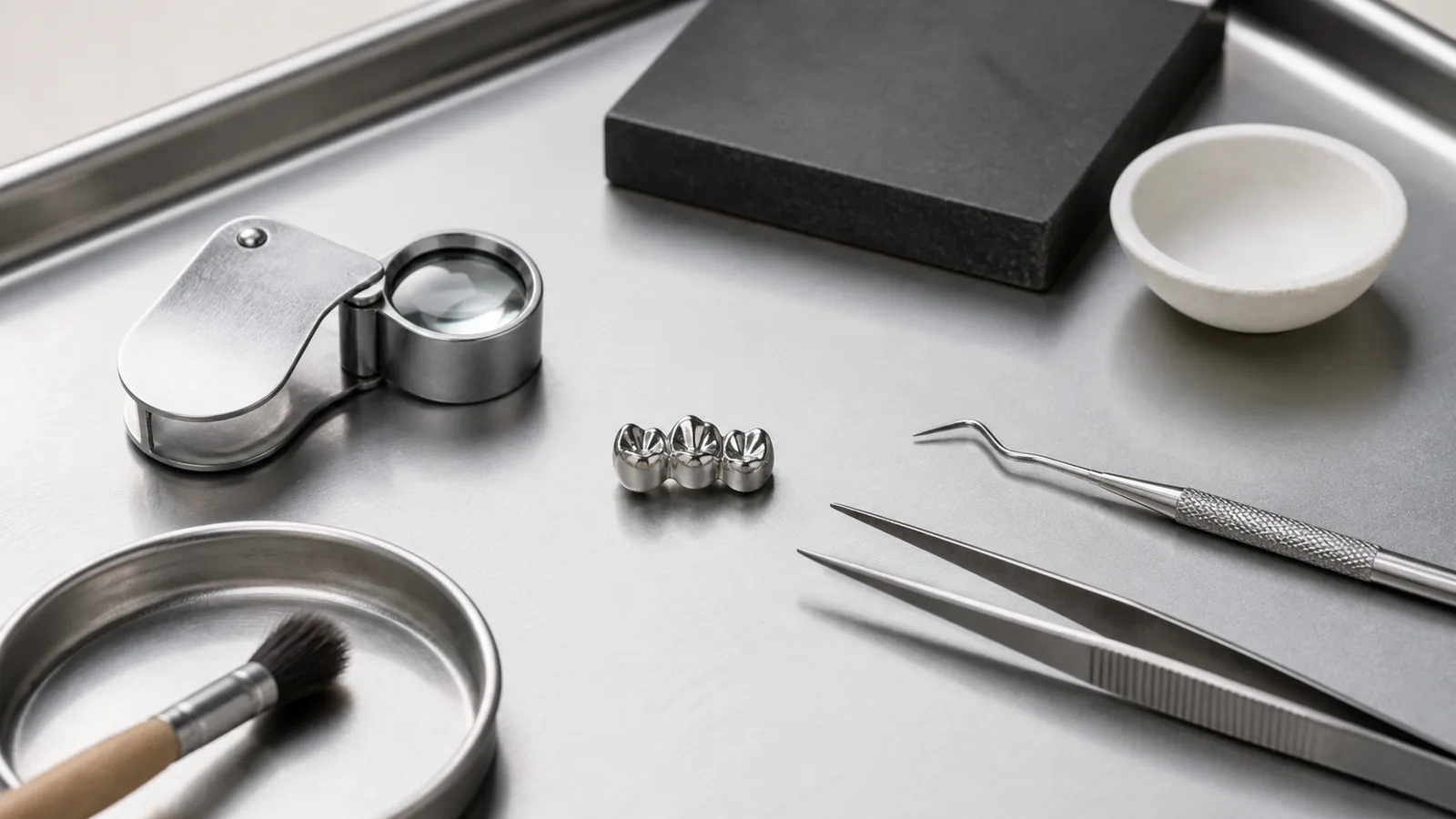
Dental gold can have value, but purity varies by alloy. Final appraisal requires metal testing and cannot be based on appearance alone.
What dental gold is
The term may describe old crowns, bridges, or other dental metal parts. They do not all have the same composition and may contain other metals.
Why alloys differ
Composition depends on manufacture and age. Yellow colour or the impression that a part is gold does not establish karat or purity.
How testing works
The material is tested with a suitable method and non-metal parts are separated where needed. Weighing and an explanation of the calculation follow. Do not remove dental parts yourself.
What to ask before appraisal
Ask whether the specific material is accepted, what evidence is needed, and whether the offer is based on net weight or alloy analysis. The final answer follows inspection.
FAQs
- Does all dental gold have value?
- No. Value depends on composition, weight, and acceptance terms.
- How is purity identified?
- Through metal testing. Appearance or a photo is not enough.
- Can a price be given from a photo?
- Only an initial conversation may be possible. Final appraisal requires the physical sample.
Related articles
- Selling gold jewellery: a practical guide
What sets the offer on gold jewellery: purity, net weight, stones, branded design and documents, and why the price is settled only after inspection.
- Silverware: how the value is calculated
Purity, weight, condition and set completeness decide what silverware is worth, not appearance. How a silverware appraisal is actually read.
- Gold 585 and 750: what the hallmarks mean
585 means 58.5% gold and 750 means 75%. Why a hallmark is a starting point for identification, not proof of purity or authenticity.