Old jewellery and heirlooms: where the value comes from
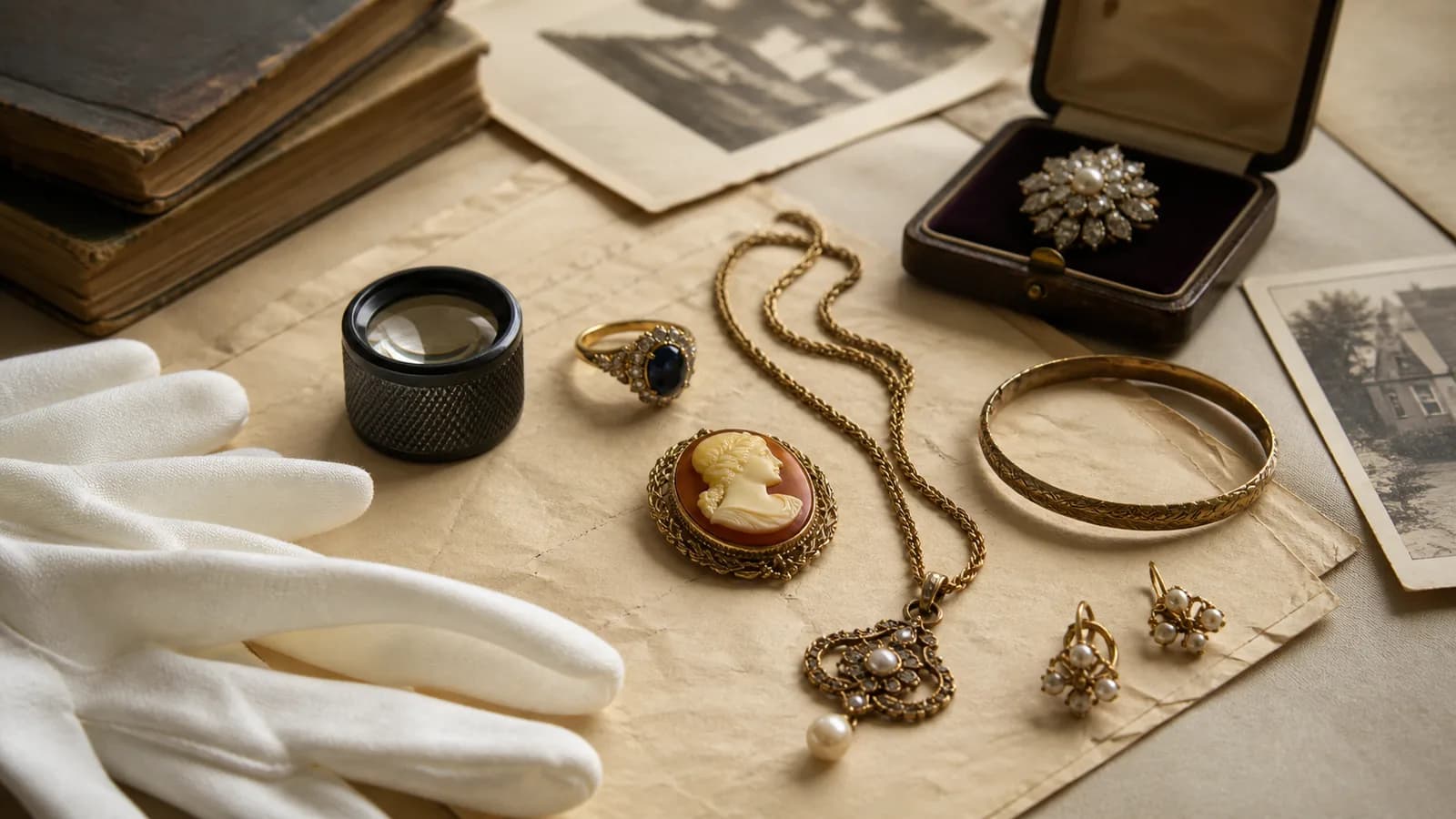
Old jewellery can have metal value, stone value, or additional market value from its maker, design, condition, and provenance.
Metal value and jewellery value
Purity and net weight establish the metal basis. Stones, distinctive design, or a recognized maker may add value, but they should be documented separately.
What matters for heirlooms
Provenance, old receipts, boxes, letters, or certificates can support the item’s history. Family history is useful context but does not replace authenticity and condition checks.
What not to do before appraisal
Do not polish, repair, or alter the piece before inspection. Avoid removing stones and keep related documents or fittings together.
Organizing photos and documents
Photograph the jewellery from all sides and record visible marks. Hide personal data in documents and bring originals only when needed.
FAQs
- Should I clean old jewellery before appraisal?
- No. Cleaning can hide or alter evidence of condition.
- Does the jewellery’s history matter?
- It may support documentation, but commercial value still requires inspection and evidence.
- Are stones paid for?
- They are assessed separately according to type, quality, condition, and documentation.
Related articles
- Selling gold jewellery: a practical guide
What sets the offer on gold jewellery: purity, net weight, stones, branded design and documents, and why the price is settled only after inspection.
- Gold 585 and 750: what the hallmarks mean
585 means 58.5% gold and 750 means 75%. Why a hallmark is a starting point for identification, not proof of purity or authenticity.
- White and rose gold: how they are appraised
Alloy colour does not change value. White and rose gold are appraised on purity and net gold weight, exactly like any other piece.