How to appraise a coin collection
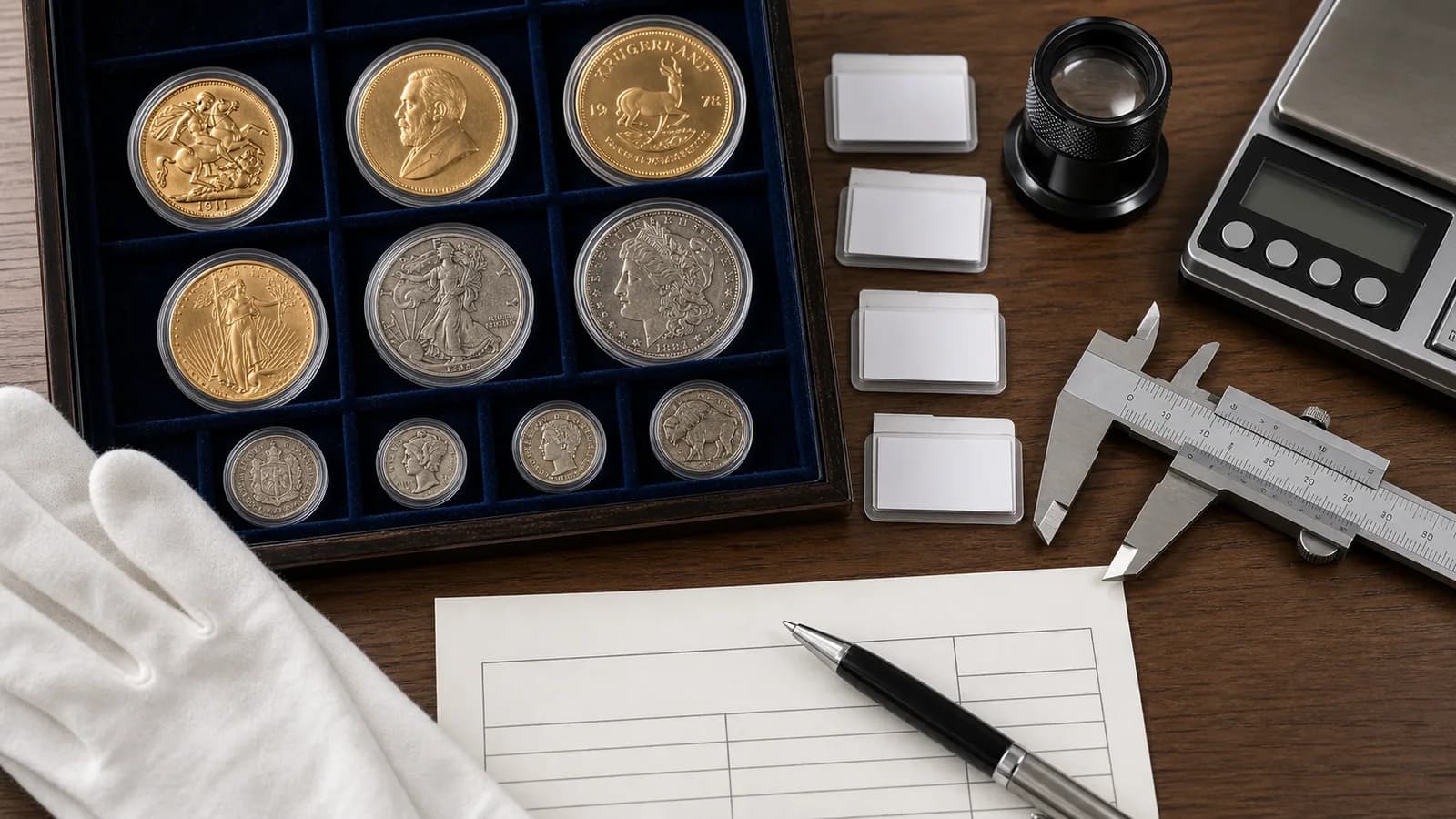
Coin collection appraisal starts with accurate recording, not a quick search for one price. The goal is to identify each item, inspect it, and separate metal value from collectible value.
Step 1: Record the collection
Note country, denomination, date, weight, dimensions, and visible inscriptions. Photograph both sides and the edge without cleaning the coin.
Step 2: Inspect the items
Inspection considers authenticity, metal, condition, and consistency of visible features. In a collection, sorting helps identify different issues and items that need separate attention.
Step 3: Assess value
Final value depends on demand and market conditions. An old price, listing, or photograph should not be treated as a guaranteed offer.
FAQs
- Should I clean the coins?
- No. Cleaning can reduce collectible appeal and alter surface evidence. Assessment is safer when coins remain in their existing condition.
- Should I weigh every coin?
- Recording weight can help, but it must be done carefully. Measurement does not replace authenticity and issue checks.
- Should the whole collection be assessed together?
- The collection can be reviewed as a group for organisation, while value may be calculated per coin or per group of similar issues.
Related articles
- Gold coins: how a collection is appraised
A collection is appraised coin by coin. Metal, weight, authenticity, condition, year and demand: why not every old coin carries the same value.
- Gold sovereign: history and value
A sovereign's value is not gold weight alone. Issue, authenticity and condition separate metal value from collector value, and both are checked.
- The Vasilopita gold sovereign: value and checks
A sovereign found in a Vasilopita may carry metal or collector value. What gets checked for authenticity and condition before any offer is made.